Your Favorite Celebrity's Skincare Line Is Basically Fancy Water in a Pretty Jar
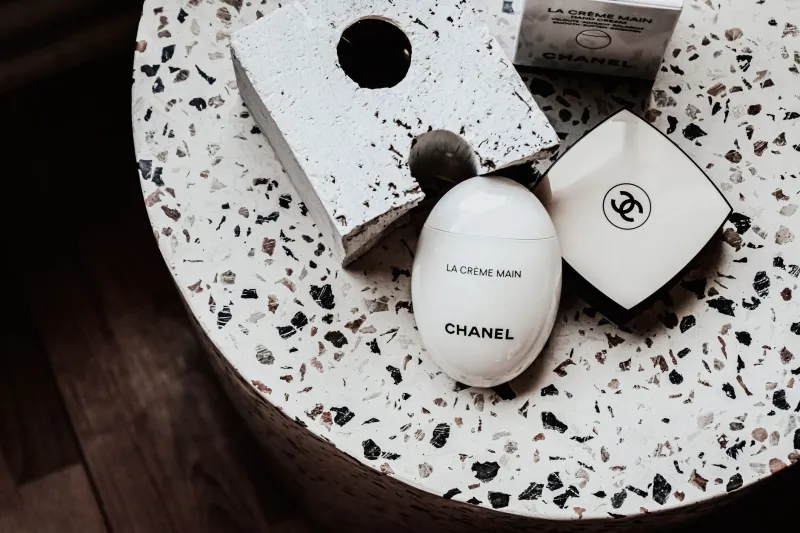
Let's set the scene. Your favorite celebrity posts a close-up selfie. Skin absolutely luminous. Pores apparently non-existent. The caption reads something like "been using this every morning and night and I genuinely cannot believe the difference 🥹" with a link to their new skincare line, conveniently launching that same week.
You hesitate for approximately eleven seconds before clicking.
This is not an accident. This is a machine, and it is very good at its job.
The Celebrity Beauty Industrial Complex, Explained Simply
Here's how the celebrity skincare pipeline actually works, stripped of the gauzy lifestyle photography and the carefully worded testimonials.
A celebrity — or more accurately, their management team — identifies an opportunity in the beauty market. They partner with a contract manufacturer, sometimes called a white-label or private-label lab, which already produces a catalog of existing formulations. The celebrity's team selects from these pre-made formulas, requests minor tweaks (a different fragrance, a slightly adjusted texture, maybe a trendy active ingredient added at just enough concentration to list on the label), and then the real work begins: branding.
The formula costs relatively little to produce. The packaging, the marketing campaign, the influencer seeding, the PR strategy, the celebrity's own promotional posts — that's where the budget actually lives. And that cost gets passed directly to you, the consumer, in the form of a $72 moisturizer that shares its core formula with a $14 drugstore alternative.
This isn't speculation. Cosmetic chemists have been sounding this alarm for years. The beauty industry operates on extraordinary markup by design, and celebrity lines exist almost entirely at the premium end of that spectrum — not because the formulas are better, but because the marketing is.
What Actually Works in Skincare (A Very Unsexy Answer)
Skincare science, at its core, is actually pretty well-established. A handful of ingredients have decades of clinical research behind them. Retinoids (vitamin A derivatives) genuinely improve skin texture and reduce signs of aging. Vitamin C, in stable formulations, can brighten and protect against environmental damage. Niacinamide does useful things for pores and uneven tone. SPF is, without any debate, the single most effective anti-aging product in existence and costs $12 at CVS.
Hyaluronic acid provides hydration. Peptides show promise. Azelaic acid works for redness and hyperpigmentation. AHAs and BHAs exfoliate effectively.
Notice that none of those are named after a celebrity, infused with a proprietary "youth crystal complex," or described as "developed through a personal journey to find skin confidence."
The hard truth is that if a celebrity skincare line contains effective ingredients, those ingredients work because of chemistry — not because of whose name is on the box. And if the formula doesn't contain those ingredients at effective concentrations? No amount of celebrity proximity is going to make your skin care.
The Facetune Factor
We also need to have an honest conversation about the before-and-after of celebrity skin, because it's doing a lot of heavy lifting in this marketing ecosystem.
The celebrities selling you skincare have access to things you do not. Professional lighting designed specifically to minimize texture. High-end photography that gets further refined in post. Makeup artists who have spent careers making skin look like it exists in a different dimensional plane than regular human skin. Dermatologists, facialists, laser treatments, and injectables that cost more per session than most people's rent.
And yes, Facetune. FaceTune and its various cousins, which can smooth, brighten, and restructure a face in the time it takes to write a caption about your "natural glow."
None of this is a moral failing. But it is a material misrepresentation when that same face is being used to sell you a $55 serum as the source of the result. The glow isn't coming from the bottle. The glow is coming from a team of professionals and a filter stack.
How to Spot the Overpriced Nonsense
A few practical filters to run any celebrity skincare launch through before your credit card gets involved:
Check the ingredient list, not the marketing copy. If the first five ingredients are water, glycerin, and a bunch of thickening agents, you are buying moisturizer with a famous person's name on it. The active ingredients that actually do something should appear high on the list — not buried at the bottom as a marketing cameo.
Search for the formula's origin. Cosmetic chemists and beauty journalists have gotten remarkably good at identifying which contract manufacturers produced which celebrity lines. If a brand's "exclusive formula" looks suspiciously similar to something already on the market, it probably is.
Apply the substitution test. Ask yourself: if this exact formula existed with no celebrity association, would I pay this price for it? Usually, the honest answer is no.
Watch the launch timing. Celebrity skincare lines have an uncanny habit of launching directly alongside a major project — a new album, a film, a reality show, a comeback moment. This is not a coincidence. The cross-promotional synergy is the point.
The Ones That Are Actually Fine (And Why)
To be fair, not every celebrity beauty line is a cynical cash grab wrapped in recycled formula. A few have earned genuine credibility — typically the ones where the celebrity demonstrably developed an obsessive personal interest in skincare, worked with respected cosmetic chemists, and priced the products relative to actual market competition rather than aspirational luxury positioning.
The difference is usually visible in the formulation details and the price point. A celebrity line that charges $28 for a well-formulated niacinamide serum is playing a different game than one charging $95 for "revitalizing essence" with no clinical backing.
But those are the exceptions. The rule is a pretty jar, a compelling origin story, and the unspoken promise that purchasing this product brings you one small, purchasable step closer to someone else's life.
It doesn't. But the jar is very pretty.
Your $14 CeraVe moisturizer, meanwhile, continues to quietly do its job.