Roommates, Ring Lights, and Resentment: The Inevitable Collapse of Every Influencer Collab House
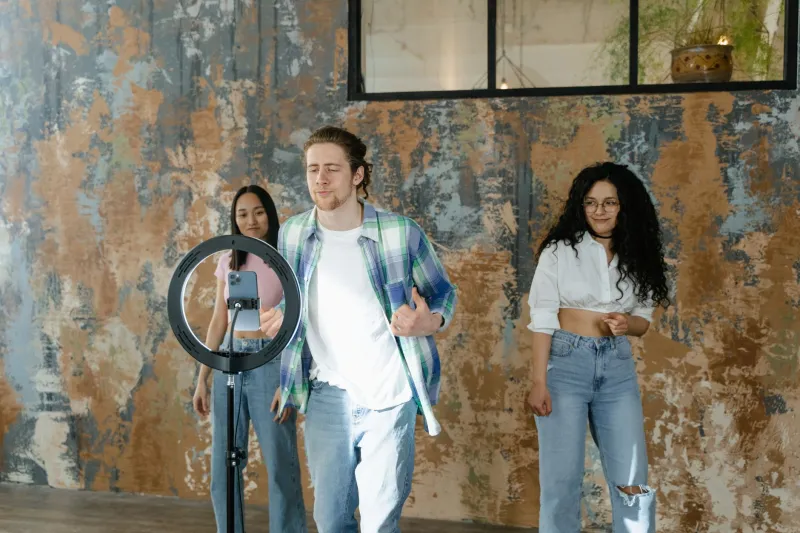
Picture this: a mansion in the Hollywood Hills, a fridge full of sponsored energy drinks, and six creators who genuinely believe they've cracked the code. They're going to collaborate every day, grow each other's audiences, split costs, and basically become the Avengers of content creation. It's going to be perfect.
Six months later, someone has subtweeted someone else's "creative direction," two people are no longer speaking except through carefully worded Instagram Stories, and the house's shared TikTok account hasn't posted since that one weird Wednesday in March.
Welcome to the Collab House Curse. Population: every content house that has ever existed.
The Dream Versus the Algorithm
The logic behind influencer houses isn't actually crazy. Pool your audiences, cross-pollinate your fanbases, share overhead costs, and generate content at a pace that would be impossible solo. The Hype House launched in late 2019 with this exact formula, assembling a roster of TikTok's fastest-rising names — Charli D'Amelio, Addison Rae, Chase Hudson — in a Bel Air estate and watched the internet absolutely lose its mind.
For about five minutes, it worked spectacularly. The combined follower count was staggering. Brands were throwing money at the concept. A Netflix docuseries materialized almost immediately, which, in retrospect, is usually the first sign that something is about to go sideways.
Because here's the thing nobody wants to admit when they're signing the lease: content creation is, at its core, a solo sport dressed up in collaborative clothing. Your audience follows you. Your aesthetic is yours. Your brand deals are negotiated on the value of your face. The moment you move six of those individual ecosystems under one roof, you've introduced a variable that no content calendar can fix — other people.
The Math Problem Nobody Solved
Let's talk money, because that's where the dream quietly starts bleeding out.
Ad revenue, brand partnerships, and sponsored posts are the lifeblood of any creator's income. In a collab house, those deals get complicated fast. Does a creator who appeared in three group videos this month get an equal cut of the house's shared sponsorship? What happens when Brand X approaches the house but specifically wants the member with 8 million followers, not the one with 800K? What's the formula for splitting a Raid Shadow Legends deal when two people did the heavy lifting and one person showed up for the thumbnail?
There isn't one. Nobody figured this out before signing the lease, because everyone was too busy imagining the vibe to stress-test the spreadsheet.
The Sway House, another early pandemic-era TikTok collective, became a minor legend in this regard — a revolving door of members, murky financial arrangements, and enough drama to fuel a mid-budget Netflix limited series (which, again, they also got). Former members have described an environment where the unspoken competition for brand deal priority created a tension that no amount of poolside content could paper over.
Proximity Is the Villain
Here's a social dynamic that reality TV producers have understood for decades: put ambitious, ego-driven people in a confined space, add cameras, and watch entropy do its thing. The difference between a Real Housewives franchise and a content house is mostly just the ring light.
Creators who were perfectly pleasant internet friends — people who hyped each other's posts, slid into DMs with encouragement, and genuinely vibed from a safe geographic distance — often discover that actually living together is a completely different proposition. Creative differences that seemed minor over FaceTime become daily friction when you're sharing a kitchen. One person's 2 AM filming session is another person's sleep deprivation. One person's "authentic chaotic energy" is another person's "please stop doing that in the common areas."
The Clubhouse, a creator collective that operated out of a Los Angeles mansion in the early 2020s, saw its membership fluctuate so dramatically that keeping track felt like following a soap opera's cast credits. Members cited everything from conflicting schedules to aesthetic incompatibility — a very polite way of saying "our vibes do not vibe."
Performance Pressure at Scale
There's also the psychological weight of performing perpetual happiness for an audience that has been sold the idea that you are all best friends.
Collab house content lives and dies on the premise of authentic chemistry. Fans aren't just watching the videos — they're emotionally invested in the friendship. When the friendship starts to crack (and it will crack), creators face an impossible choice: pretend everything is fine and keep manufacturing warmth for the camera, or be honest and risk the entire brand collapsing in real time.
Most choose the former, which means months of staged group moments while the actual group dynamic is quietly dissolving behind the scenes. That's an enormous amount of emotional labor on top of an already demanding content schedule, and eventually, something gives.
So Why Do People Keep Doing It?
Because the idea is genuinely good, and occasionally, it kind of works — at least for a while. The exposure benefits are real. The early-stage momentum is real. And for creators who are just breaking through, the financial cushion of shared expenses can be the difference between making it and going back to their hometown.
But the ones that survive longest tend to be the ones that treated it less like a friendship commune and more like a professional arrangement with clearly defined terms. Contracts. Revenue splits decided upfront. Exit clauses. The unsexy infrastructure that nobody wants to think about when they're fantasizing about viral group content.
The collab house dream isn't dead — it's just chronically underprepared. Every new generation of creators looks at the wreckage of the last batch and thinks, we'll be different. They move in. They film the first week's content. Someone eats someone else's clearly labeled leftovers.
And somewhere around month five, the group chat goes quiet.