He's Not Your Boyfriend, He's Your Content: How TikTok Turned Romance Into a Side Hustle
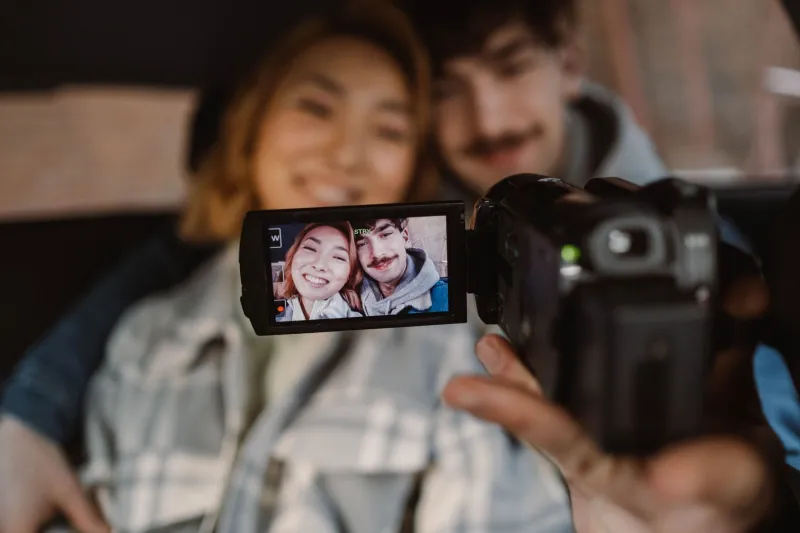
Somewhere between the third "boyfriend does my makeup" video and the forty-seventh "surprising my man with his favorite meal" compilation, something quietly broke in the American dating psyche. We didn't notice at first. It looked cute. It looked couple-y. It looked like love, or at least like love's extremely photogenic cousin who knows how to hit a trending audio cue.
But here's the uncomfortable truth that nobody's stitching: a disturbingly large number of Gen Z relationships have become essentially unpaid internships in someone else's content strategy.
The Boyfriend as Background Character (With Speaking Lines)
Let's establish the archetype. TikTok Boyfriend Energy — TBE, if you want to give it the acronym it absolutely does not deserve — is a specific kind of relationship dynamic where one partner (usually, though not exclusively, the guy) exists primarily as a narrative device in the other partner's online persona. He's the foil. The hype man. The unwitting subject of the "I asked my boyfriend to guess this celebrity" challenge for the fifth time this month.
He didn't audition for this role. He just showed up to a date and now he's a recurring character with a fan base that ships him with his girlfriend's aesthetic.
The pressure this creates is genuinely bizarre when you say it out loud. Men in these relationships report feeling like they're constantly being evaluated — not by their partner, but by their partner's 200,000 followers who have very strong opinions about whether his reaction to the gender reveal balloon was "giving unbothered king" or "giving red flag." That's a performance review from strangers who follow someone for outfit inspo. Nobody signed up for that.
Why We're All Watching
Here's where it gets interesting, because the audience isn't innocent in this. We consume these videos with an almost anthropological hunger. Couple content performs incredibly well across every major platform because it triggers something primal — we want to see partnership, we want to believe in it, we want to steal their apartment decor and their apparent emotional stability.
But what we're actually watching is a curated fiction. The "authentic" moment where he surprised her with flowers was filmed three times for the right angle. The road trip where they "couldn't stop laughing" was also the road trip where they had a brutal argument about whose Spotify playlist was ruining the vibe. None of that makes the cut.
Social media didn't invent romantic performance — people have been performing relationships for family dinners and church socials since forever. But TikTok industrialized it and handed everyone a distribution network. Now the performance has metrics. Now you can see, in real time, whether your relationship is resonating.
The Attraction Rewrite Nobody Asked For
Maybe the most quietly destabilizing effect of TBE culture is what it's doing to how attraction gets defined and communicated. "Boyfriend material" used to mean reliable, kind, emotionally available — the boring stuff that actually matters. Now it increasingly means: will he look good in a softly lit video? Will he play along? Does he have a face that reads well in vertical format?
There are genuinely men out there shaping their personalities — their humor, their interests, their communication style — around what performs well online. Not to impress their actual partner, but to avoid becoming the villain in a vague-posting video titled "things my boyfriend does that make me feel unseen." That video has 4.2 million views, by the way. He's seen it.
This is not a small thing. When the feedback loop between real behavior and public reaction gets tight enough, people stop being themselves and start being their most palatable edit.
The Quiet Revolution: Couples Who Disappeared
Here's a trend that doesn't get nearly enough credit: the couples who simply opted out.
You've probably noticed them in your own life — pairs who are genuinely, solidly, boringly happy, and who have exactly zero TikToks to show for it. No "meet my person" video. No anniversary post with a carousel of photos captioned with song lyrics. Just two people existing together without submitting it for public review.
Anecdotally — and the data, where it exists, tends to agree — these relationships last longer. Not because privacy is magic, but because when you remove the audience, you remove the performance incentive. You're not optimizing the relationship for content. You're just... in it. Weird, gross, unfilmed, and apparently thriving.
The most radical thing a couple can do in 2024 might genuinely be to keep their relationship off the internet. That's a sentence that would've been incomprehensible ten years ago, and yet here we are.
So What Do We Actually Do With This?
Nobody's saying delete TikTok and return to courtship by candlelight (though honestly, the candlelight era had some things going for it). Couples sharing their lives online isn't inherently toxic. Joy is worth documenting. Milestones deserve celebration.
But there's a real conversation to be had — one that Gen Z is actually starting to have, in comment sections and therapy sessions and in the quiet of relationships where someone finally says "I don't want to film this moment, I just want to be in it" — about where the content ends and the relationship begins.
Because if you can't answer that question, you might not be in a relationship. You might just be in a very committed content partnership with someone you also happen to share a bed with.
And honestly? That's not a collab either of you should be proud of.