Silence Is the New Screaming: How Celebrities Turned Being Introverted Into a Full-Time Brand
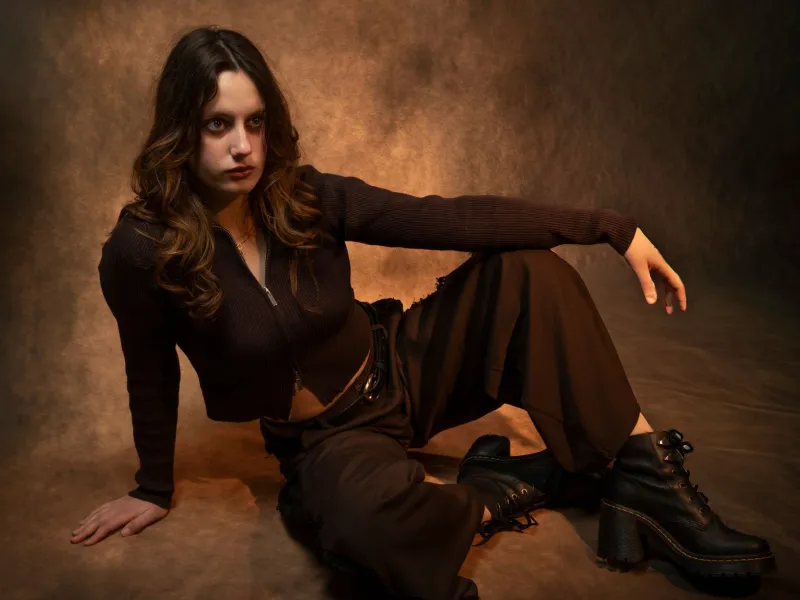
There is a specific kind of celebrity interview that has become so predictable it practically writes itself. The star arrives slightly late. They speak in half-sentences. They glance at the floor with the practiced melancholy of someone who has been briefed by three different publicists on exactly how to seem like they weren't briefed at all. Then, inevitably, they say something like, "I'm really not great at this," while sitting in a $4,000 jacket under professional lighting for a magazine that paid handsomely for the privilege of their discomfort.
Welcome to the Introvert Industrial Complex — Hollywood's most lucrative personality repackage since "relatability" peaked in 2015.
The Aesthetic of Reluctant Fame
Let's be clear about what we're actually talking about here. Introversion, the real kind, is a legitimate psychological trait. It means social interaction drains your energy. It's not a vibe board. It's not a moodboard. It does not have a signature color palette.
But somewhere in the last five years, a very specific flavor of celebrity decided that performing introversion was the ultimate counterprogram to the loud, oversharing, ring-light-worshipping influencer era. And honestly, as a brand pivot, it was genius.
Timothée Chalamet is perhaps the patron saint of this movement. The man has been on more magazine covers than most people have had hot meals, yet every single profile manages to frame him as someone who finds the whole thing vaguely baffling. He speaks carefully. He references obscure films. He has the energy of a philosophy student who is very tired of explaining himself, which paradoxically makes everyone want him to explain himself constantly.
Billie Eilish built an entire early career on the architecture of not wanting to be perceived, which — and this cannot be stressed enough — she did by being extremely, relentlessly public. The oversized clothes, the whisper-singing, the aesthetic of someone who would rather be anywhere else: all of it meticulously documented, packaged, and distributed to hundreds of millions of followers who felt like they were witnessing something private.
That's the trick. The performance of privacy is still a performance.
Gen Z Bought the Myth and Here's Why
Here's the part where we have to be a little honest about ourselves, because Gen Z — and this is said with love and mild exasperation — has developed a deeply romantic relationship with the idea that silence equals depth.
The logic goes something like this: loud people are trying too hard. Loud people want attention. Wanting attention is cringe. Therefore, people who seem like they don't want attention are automatically more interesting, more authentic, more real.
This is, of course, complete nonsense when applied to celebrities — a class of people whose entire professional existence depends on public attention — but it feels true, and feeling true is basically the same as being true in the attention economy.
The introvert aesthetic also maps perfectly onto the broader Gen Z distrust of performative positivity. After years of toxic hustle culture, forced smiles, and Instagram grids that looked like stock photo collections of someone else's life, the celebrity who seems slightly uncomfortable at their own premiere feels like a breath of fresh air. They're just like me, thinks the person who spent $80 on a concert ticket. They also find all this a bit much.
They do not find it a bit much. They have a team of people whose job it is to make sure they find it exactly the right amount of much.
Spotting the Genuine Article
To be fair — and Friizle is nothing if not occasionally fair — some celebrities genuinely are introverted, and the distinction matters.
Kendrick Lamar, for instance, has maintained a level of public withdrawal that is consistent, long-term, and frankly kind of impressive given the gravitational pull of modern celebrity culture. He doesn't do the awkward-but-charming interview circuit. He just... doesn't show up very much. That's not a brand. That's a boundary.
Daniel Day-Lewis famously went full hermit between projects for years at a time, which is less of a personality brand and more of a lifestyle that would give most publicists a full nervous breakdown.
The difference between genuine introversion and the celebrity performance of it is actually pretty easy to spot once you know what you're looking for. Genuine introverts tend to be consistently private — not just in contexts where the privacy is being photographed. They don't have "candid" moments that somehow make it onto their own Instagram. Their discomfort doesn't come with a professional photographer attached.
Performed introversion, on the other hand, tends to be remarkably well-lit.
The Quiet Ones Who Are Loudest About Being Quiet
The funniest — and most telling — version of this trend is the celebrity who constantly talks about how much they hate talking. The press tour where every interview features the star explaining, at length, how much they dislike press tours. The social media post about needing to step back from social media. The magazine feature about how they never read magazine features about themselves.
This is not introversion. This is extroversion in a trench coat.
There's a whole subgenre of celebrity content built around the "I'm so awkward" performance — fumbled late-night appearances that are actually very carefully rehearsed, self-deprecating red carpet moments that have been workshopped with a stylist and a social media manager, "no makeup" looks that require forty-five minutes and six specific products to achieve.
And look — none of this is necessarily malicious. Celebrities are products as much as they are people, and their teams are simply responding to what the market wants. Right now, the market wants the illusion of a person who doesn't particularly care if you're watching, which means the market is going to get exactly that, delivered with full production value.
What We Actually Lose When Introversion Becomes a Trend
Here's the part that actually matters, underneath all the snark: when a genuine personality trait gets aestheticized and commodified by people who don't really have it, the people who do have it get a little bit erased.
Actual introverts — people who genuinely struggle with social energy, who find networking exhausting, who don't thrive in the loud, fast, always-on digital environment — don't get to be the moody celebrity with the perfect cheekbones. They get overlooked in job interviews. They get labeled as unfriendly. They get told to speak up more in meetings.
Meanwhile, the celebrity version of introversion comes with none of the actual costs and all of the aesthetic rewards. It's depth without the inconvenience of being deep.
The Verdict
The Quiet Girl Era — that specific cultural moment where being reserved became aspirational — isn't really over. It's just been fully absorbed into the celebrity branding machine, which is somehow both its greatest triumph and its most complete defeat.
Silence, it turns out, is only powerful when it's actually chosen. When it's scheduled, styled, and posted on a Tuesday morning for maximum engagement, it's just noise with better PR.
But hey. The hoodie does look really good.