Suddenly Everyone's Got a Cousin: The Celebrity Relative Reveal Is Getting Out of Hand
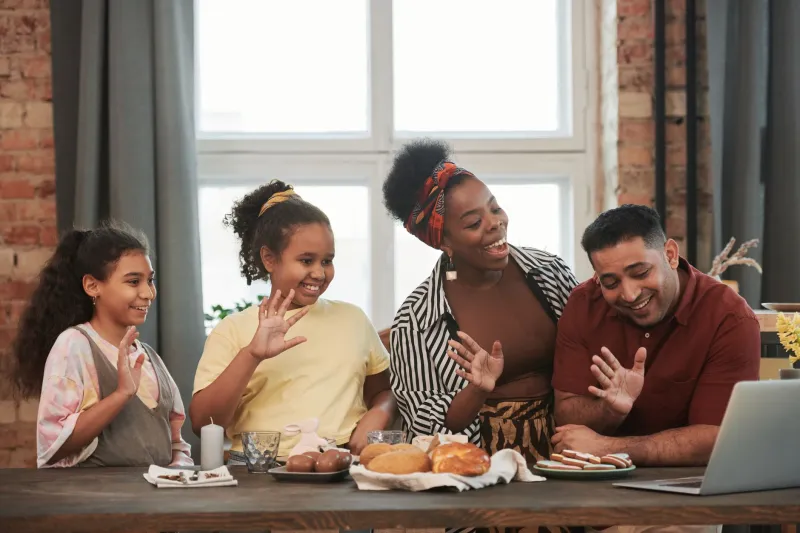
Somewhere between the third season of a reality show and a celebrity's inevitable pivot to "entrepreneurship," a strange ritual takes place. A new person materializes. They're introduced with the energy of a surprise guest at a birthday party — warm, enthusiastic, slightly confusing. They have the same cheekbones. They laugh at the same jokes. And according to the Instagram caption, they've been "the most supportive person in my corner since Day One."
You have never heard of them in your life.
Welcome to the Celebrity Relative Reveal, a phenomenon so consistent it practically has its own Wikipedia entry at this point. The formula is simple: fame plateaus, a business idea hatches, and suddenly a previously undetected family member emerges from the woodwork holding a mood board and a freshly registered LLC.
The Anatomy of the Mysterious New Partner
There's a very specific type of relative being unveiled in these situations, and it's almost never the sibling you already know about. It's not the mom who made a cameo on the docuseries. It's someone from the periphery — a cousin from a city they've never mentioned, an aunt who "runs things behind the scenes," a childhood best friend who is technically not a blood relative but has been granted honorary family status for the purposes of this venture.
The announcement is always dressed up as heartwarming. There's a photo dump. There's a caption about trust and authenticity. There's a comment section full of people saying "love this for you!!" without actually knowing who the other person is.
What there is not, notably, is any prior evidence that this person existed.
Why Celebrities Are Suddenly So Into Family Business
Here's the thing — this isn't entirely cynical. Family-run businesses are genuinely a cornerstone of American culture. From corner stores to actual empires, working with people you trust makes a certain kind of sense. The problem is that in celebrity-land, "people I trust" has become a revolving door of loosely connected relatives whose primary qualification appears to be availability and the willingness to share a ring light.
There are a few theories floating around about why this keeps happening.
Theory One: Genuine Nepotism, But Make It Wholesome. The celebrity wants to give someone from their family a leg up, which is honestly a very human impulse. The difference is that regular people get their cousin a job at the restaurant they work at. Celebrities get their cousin a co-founder credit on a wellness brand that will be featured in three magazine profiles before quietly going dark eighteen months later.
Theory Two: The Blame Buffer. This is the spicy one. When a celebrity venture fails — and statistically, most of them do — the narrative cleanup is significantly easier if there's a co-pilot to share the turbulence with. You can't fully roast someone for a disastrous skincare launch if they're standing next to their sweet-looking relative who "handled the product development side." The optics become complicated. The internet gets distracted. The celebrity escapes with half their reputation intact.
Theory Three: They Genuinely Need Help and Don't Know Who Else to Call. Fame is isolating in ways that are genuinely hard to explain, and trusting people outside your immediate circle is a skill that gets harder the more famous you become. Bringing in a relative — even a distant one — at least provides the illusion of a safety net. Whether that relative knows anything about running a podcast or designing a clothing line is, apparently, a secondary concern.
The Venture Graveyard Is Full of Famous Last Names
Let's be honest about the track record here, because it is not inspiring. The celebrity-plus-mysterious-relative business model has produced some of the most spectacular flameouts in recent entertainment memory. Subscription boxes that shipped once. Podcast series that recorded four episodes and then "went on hiatus" in 2021 and never came back. Fashion collaborations that existed primarily as an Instagram grid aesthetic before the website quietly stopped processing orders.
And in almost every post-mortem, the narrative splits neatly along family lines. The celebrity pivots to their next thing. The relative disappears back into private life. Everyone agrees, publicly, that it was a learning experience. Nobody mentions the people who actually bought the product.
The Audience Is Catching On (Sort Of)
To the credit of the digitally-native crowd that consumes this content, the skepticism is growing. Comment sections have gotten sharper. People are starting to ask pointed questions — like why this supposed lifelong confidant has a brand-new Instagram account with 200 followers and a bio that was clearly written by a publicist. Or why the "family business" announcement always seems to coincide with a slow news cycle and a dip in engagement metrics.
But here's the wild part: it keeps working anyway. Not commercially, necessarily, but culturally. The reveal generates press. The press generates curiosity. The curiosity generates a news cycle. By the time everyone figures out that the candle line smells like a hotel lobby and the podcast has the audio quality of a voice memo, the celebrity has already moved on to their next chapter, which will probably involve a different relative and a different product and the exact same Instagram caption energy.
What This Says About Celebrity Culture in 2025
The Mysterious Relative Industrial Complex is really just a symptom of a bigger thing — the total collapse of the line between personal brand and actual personhood. Celebrities have spent years selling authenticity as a product, which means they've had to keep finding new ways to signal that they're real, grounded, connected to something genuine.
Family is the ultimate authenticity prop. It's hard to argue with. You can't exactly accuse someone of being fake for wanting to work with their cousin. The internet has rules, and one of them is that you're not allowed to be fully cynical about someone's grandmother.
So the relatives keep coming. The LLCs keep getting filed. The mood boards keep getting made. And somewhere, in a city you've never associated with your favorite celebrity, a second cousin is updating their LinkedIn to say "Co-Founder" and wondering if they should start a personal brand.
The answer, for what it's worth, is probably yes. At minimum, it'll get them a podcast episode out of it before the whole thing quietly dissolves into the content ether.
Welcome to the family business. Nobody's getting paid, but the press release is immaculate.